
You’ve probably heard the term before. Maybe your dentist mentioned it. Maybe a friend had one put in. But what actually is a dental crown? And why do so many people end up needing one? Let’s clear up the confusion.
What is a Dental Crown?
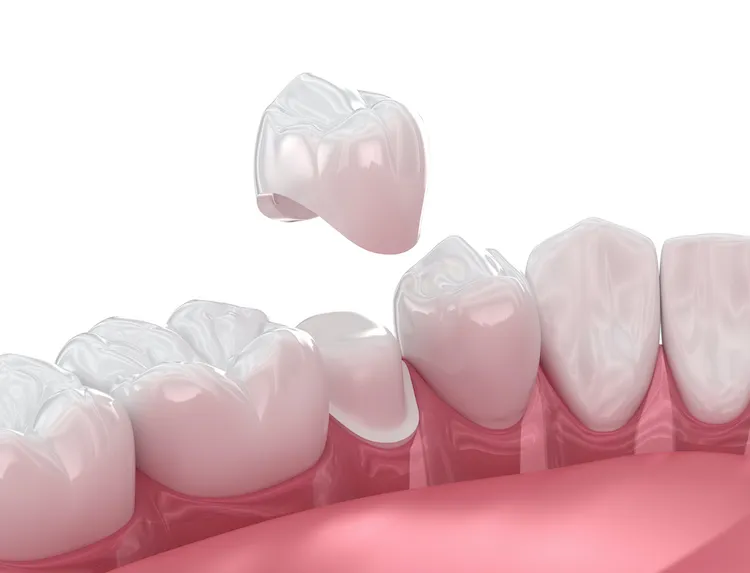
A dental crown is a custom-made cap that fits over your entire tooth. Not just the top. The whole thing. It covers every surface above the gumline, restoring the tooth’s shape, size, strength, and appearance.
Think of it like a helmet for your tooth. Once it’s cemented in place, it becomes the new outer surface. The natural tooth stays underneath, protected and reinforced.
When Does a Tooth Need a Crown?
Crowns aren’t one-size-fits-all. They serve a few different purposes depending on what’s going on in your mouth.
- To protect a weak tooth: If you’ve had a large cavity filled, that tooth may be left with more filling than natural structure. Over time, it can chip or break under normal chewing pressure. A crown holds it all together.
- To restore a broken or worn-down tooth: Teeth chip. Years of grinding can wear them down to nubs. A crown rebuilds what’s been lost.
- After a root canal: Root canal treatment often saves a tooth, but it also leaves it brittle. A crown is usually the final step to protect it from fracturing later.
- To hold a dental bridge in place: If you have a dental bridge replacing a missing tooth, the crowns on either side anchor it to your natural teeth.
- To cover a dental implant: Implants replace the root of a missing tooth. The crown is the visible part that sits on top.
- For cosmetic reasons: Sometimes crowns improve the appearance of a badly stained, misshapen, or severely worn tooth that other cosmetic treatments can’t fix.
What Are Crowns Made Of?
You’ve got options here. The best choice depends on the tooth’s location, how much force it takes to chew, and what matters most to you aesthetically.
- Porcelain or ceramic: These look the most natural. They’re a great choice for front teeth, or anywhere your smile shows. They resist staining well and blend beautifully with your other teeth.
- Porcelain fused to metal: Stronger than all-porcelain, with a natural-looking surface. The metal underneath adds durability, though a dark line can sometimes show at the gumline over time.
- Gold or metal alloys: Extremely durable and gentle on opposing teeth. Not the most aesthetic choice for visible areas, but they last a very long time.
- Resin: Less expensive than porcelain, but more prone to wear and staining.
Dr. Sang will talk through which material makes the most sense for your specific tooth and situation.
What to Expect During the Process
Getting a crown usually takes two visits.
At the first appointment, we numb the area and reshape your tooth so the crown fits comfortably. Then we take impressions, either with traditional molding trays or digital scanning, and send them to a dental lab. You’ll leave with a temporary crown to protect your tooth in the meantime.
About two weeks later, you come back. We remove the temporary, check the fit and color of your permanent crown, and cement it into place. Most patients are surprised by how normal it feels. Once it’s on, you shouldn’t notice it’s there at all.
How Long Do Crowns Last?
With good oral hygiene and regular checkups, a crown can last 10 to 15 years or longer. The key is caring for the tooth underneath. Crowns don’t get cavities, but the tooth margins around them can. So brushing, flossing, and routine dental visits still matter just as much.
Do You Think You Might Need a Crown?
If you have a chipped tooth, a large old filling, or a tooth that’s been causing you trouble, come see us. Dr. Sang can evaluate what’s going on and help you understand whether a crown is the right solution.
Call Palmetto Smiles today or request an appointment online. We’ll take a look and walk you through your options.